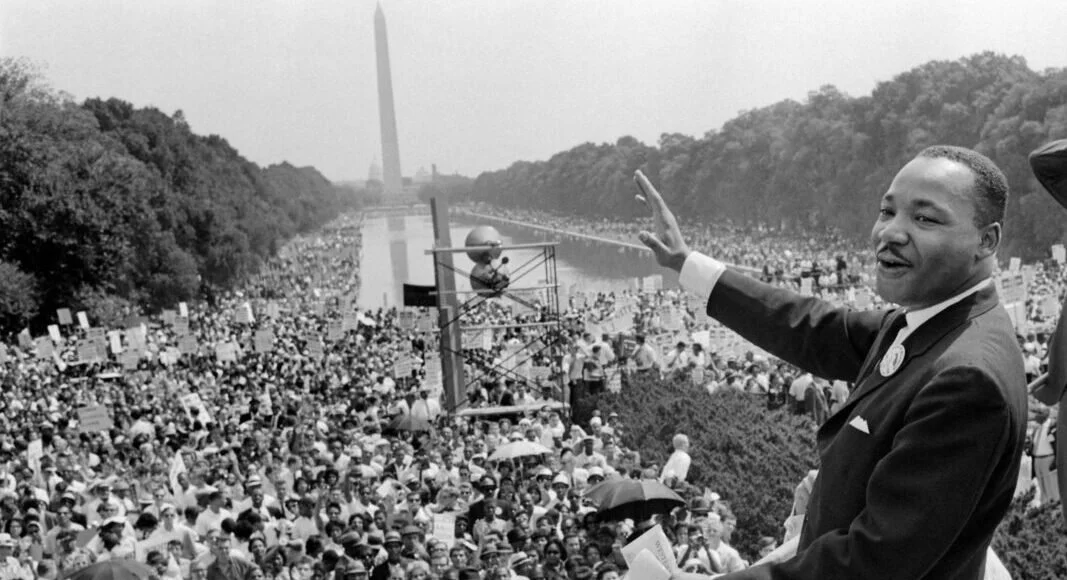
Civil Rights leader, Martin Luther King Jr., transformed American history, inspiring millions and helping end legal segregation in the United States during the 1950s through the 1960s. He led boycotts, associations, and marches to fight racial injustice against African Americans and push the country towards equality, eventually becoming one of the most important figures in Black History.
A writer from The King Center stated, “He went on to lead similar campaigns against poverty and international conflict, always maintaining fidelity to his principles that men and women everywhere, regardless of color or creed, are equal members of the human family.”
Major Contributions
To start off, King’s first major movement was at the age of 26 when he led the Montgomery Bus Boycott that lasted 13 full months. The boycott began after Rosa Parks refused to give up her seat to a white passenger. In 1955, King was chosen to lead the boycott, which successfully affected segregation on public buses. During this time, King’s home got bombed due to racial segregation, but despite this, he kept the boycott free from violence.
Another defining movement he led was the March on Washington for Jobs and Freedom on February 28, 1963. At the Lincoln Memorial in Washington, D.C., more than 250,000 people gathered to peacefully protest on Civil Rights and job equality for African Americans. There, King delivered his famous speech, “I Have a Dream,” which spoke about a future without segregation. In his speech, he said, “I look to a day when people will not be judged by the color of their skin, but by the content of their character.”
His Impact
King’s leadership affected the way people treated African Americans and opened doors for major changes. The March on Washington paved the way for the Civil Rights Act of 1964 and the Voting Rights Act of 1965. Additionally, the Montgomery Bus Boycott led to the end of legal segregation on public buses. King kept his movements nonviolent at all costs, and this inspired many other civil rights activists to do the same.
Britannica writer, David L. Leview, mentioned, “His strategy of emphasizing nonviolent protest and interracial cooperation enabled him to fight effectively against the Southern system of legalized racial segregation and discrimination,”
Early Life
King was born January 15, 1929, in Atlanta, Georgia. He graduated high school at the age of 15 and later attended Morehouse College in 1944. He graduated college with a sociology degree, followed by a Bachelor of Divinity degree, then a Ph.D. in theology from Boston University. As a kid, he was heavily influenced by his father, who was a pastor and fought segregation. This led him to become a pastor at the Dexter Avenue Baptist Church in Montgomery, Alabama, and in 1957, he became president of the Southern Christian Leadership Conference.
A Lasting Legacy
On April 4, 1968, King was assassinated while standing on a balcony of a motel in Memphis by a man named James Earl Ray. His death sparked many riots in major cities, and President Johnson declared a day of mourning for him. Days later, Congressman John Conyers introduced a bill for a holiday after King’s assassination.
“He continues to be remembered as one of the most influential and inspirational Black leaders in history,” declared Biography Editors, Catherine Caruso and Tim Ott.