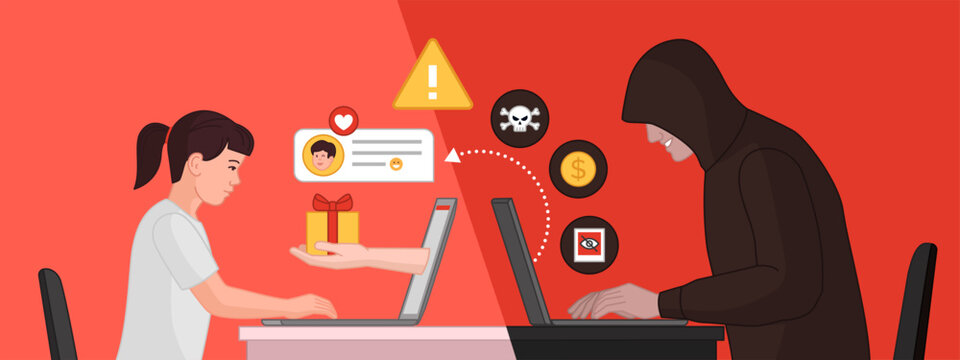
Nowadays, pedophilia is slowly becoming normalized in our society. Whether it’s young girls hitting on guys a decade older than them or a senior actually trying to get with a freshman, we see pedophilia everywhere, and sometimes we choose to ignore it because people think it’s a joke. Now that more and more children are allowed access to the online world, there is a new place for these predators to set up camp.
Children right now playing games like Roblox or Fortnite could be playing with someone who might not even be who they claim to be. According to the Child Crime Prevention and Safety Center, “Adult predators looking to groom children online often visit social media websites that are popular with young people and will pretend to be their age. The adult may try to secure their trust with fake profile pictures, by pretending to share similar interests, by offering gifts to the child or by complimenting the child.”
Junior Giselle Arellano states that some indicators that someone not being what they say could be “out-of-date responses.” Sophomore Camila Flores adds that “if they give you a picture from Google or Pinterest and claim it’s them or ask really personal questions about you” are also some red flags.
But even with these signs, most children are forced to stay with this groomer. These groomers are very manipulative and are able to convince the minor to send them inappropriate pictures. The Child Crime Prevention and Safety Center believes that “The groomer may blackmail the child by threatening to release the private photos or videos and share them with the child’s friends or family.” Flores claims that she feels “a bit paranoid when [she] posts online.” She also states, “I’m a bit afraid that whatever I post can give out any sort of information about me that can lead someone towards my location.”
Both Arellano and junior Cesar Hernandez are worried about the safety of their younger siblings. Arellano states, “I get scared [that] my sister would encounter [them], considering she isn’t that smart [when it comes to sensing danger].” Hernandez also worries that their “younger siblings might encounter them.” Due to these worries from people around the world, there are now multiple ways that parents can keep an eye on their children.
For example, the Criminal Division U.S. Department of Justice suggests that parents should “review games, apps, and social media sites before they are downloaded or used by children [and] pay particular attention to apps and sites that feature end-to-end encryption, direct messaging, video chats, file uploads, and user anonymity, which are frequently relied upon by online child predators.” They also suggest that they should “discuss internet safety and develop an online safety plan with children before they engage in online activity, establish clear guidelines, teach children to spot red flags, encourage children to have open communication with you, [and] be alert to potential signs of abuse, including changes in children’s use of electronic devices, attempts to conceal online activity, withdrawn behavior, angry outbursts, anxiety, and depression.”
When asked about the rise in online pedophilia cases, Flores states, “I think that the online world has become the new playground for pedophiles and kids nowadays are more gullible and will do anything to gain some sort of connection online without worrying about the risks.” Arellano mentions that “parents [are] giving their kids too much online access at younger ages now.” Hernandez also agrees, stating, “The internet has become more accessible to children, therefore more opportunities for predation.”
The idea of online predators is not a joke and should not be treated as one. It is a very real and very serious issue that can result in a felony when arrested. There is always someone around us that could have been a victim, but because of how normalized this situation is, no one will take them seriously and cause them to never speak up about it. Be wary of who you are talking to online and stay safe.